Back in October, we talked about your organization’s reputation and briefly talked about crisis management. And because we only touched on crisis management, it’s time to make this a little bit simpler for you. You can have all the plans in the world and be as prepared as all get out but…
Let’s imagine that it’s happened. Your organization has had an incident go viral and NOT in a good way. Your employees are being questioned by media, the news is outside your building waiting for an answer, you are getting phone calls left and right, and your email inbox has over 500 new emails. It’s going to be a long night. It’s time to hunker down, order some Chinese delivery, and make one of the most important phone calls your organization may ever make.
That phone call you’re going to make? It is to a public relations firm (if they haven’t already reached out to you like one of those accident attorneys). And that firm will specialize in crisis management. And yes, it is probably going to be expensive but let me tell you why it’s worth it.
Your crisis PR rep does this for a living. They have seen some of the worst of the worst. They will be able to create an unbiased plan that is specific for your organization that will relate to consumers and your stakeholders. They will be able to help you craft your apology/stance statement. They will coach you in speaking those statements. They will have contacts that can give you a platform to speak. They will also be able to guide you in recovering your reputation.
And that’s really it. Oh, and maybe call a lawyer. And – make sure it’s really a crisis. Don’t go all Michael Scott…. You know what’s coming…
Remember when, in my very first blog post, I told you that this blog was part of a class project? Each week, these blogs have been based on an assignment. My goal has been to take that assignment and apply it to the non-profit/fundraising world as we know it.
This week is a little bit of a doozy because it is about customer relations on the internet and on social media. As a non-profit, we don’t necessarily have customers. We have donors that support our organizations, and we have beneficiaries that receive the programming or services we provide.
When we communicate with both donors and beneficiaries it can be in all forms. We have websites. We try to maintain a social media presence. We write letters, send emails, and make phone calls. Here are a few ideas for you to consider.
It isn’t about us. Our communications need to be geared toward our audience. Written with them in mind and full of information that they want.
Remember your platform. If it is social media, short sweet and to the point is the way to go. Images can help you communicate your message too. Links back to your website
Include links to your website. This is a great way to increase your website traffic.
Write your own blogs. Blogs are a fantastic way to elaborate on what your social media post was about. They are also great to explain your organization’s needs and purpose. It’s a place to share client success stories. And it can be used to share your donors’ stories.
Set up an instant reply on social media. Instant replies for direct messages is an easy and efficient way to acknowledge the message and provide general information. It can include your website, office hours, your telephone number.
Respond to social media comments, likes, and shares. Give it that ❤ emoji! Leave a comment. Thank them. Address their concern. Answer their questions.
Obviously this isn’t an exhaustive list. There’s a lot more to consider. I believe that if you can do these simple things, you’ll create a positive, informative environment that your clients, beneficiaries, and donors will respond.
And remember, you have the ability to reach people all over the world through your website and social media. Even if you have a small organization in a small town with only 100 donors and 4 clients, you are only a Google search away.
One of my go to resources for social media and digital marketing/public relations is HubSpot. They actually have free certificates you can earn regarding the different types of marketing or communications you want to do. Here’s their link. I don’t get paid for any referrals so you don’t have to mention my name or anything.
There is a saying that goes something like, character is what you do when people aren’t watching… Okay, it was Jason Mraz. He said, “The measure of your character is not what you do when people are looking. It’s what you do when you think no one is looking.” This is something we can apply to our organizations. Just because we don’t know who is watching, you can guarantee that someone is watching. Be mindful. Be intentional. Be the example you want everyone to live up to.
And also, here’s a little WUPHF for you – I mean Ryan from the Office pretty much created the basis for Hootsuite, right?
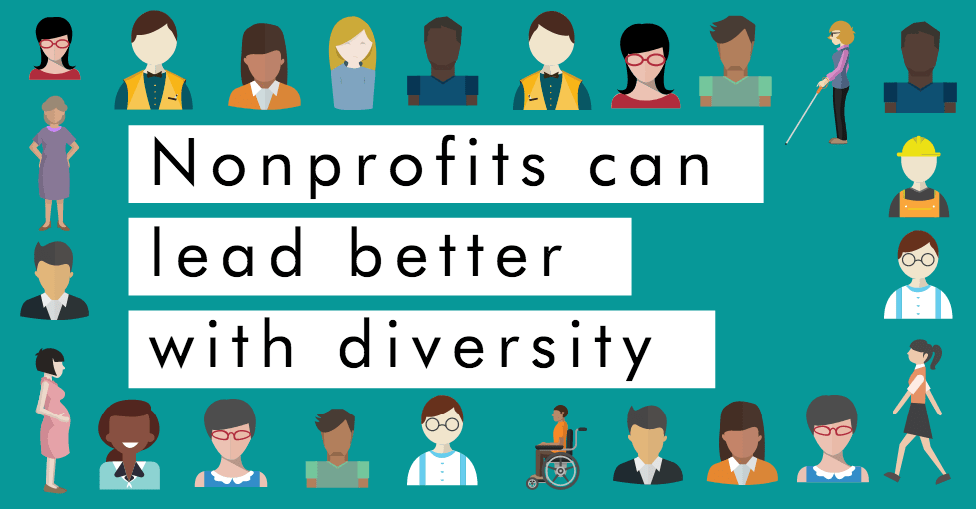
There is a word going around right now that we are all hearing. “Diversity” And rightfully so. There is a lot going on right now in the world that is bringing to light the injustices that black, indigenous, and people of color are facing every day. And in our organizations, it is important that we are intentional and pro-active in facing challenges in addressing diversity.
Diversity, by definition, is “the practice or quality of including or involving people from a range of different social and ethnic backgrounds and of different genders, sexual orientations, etc.” And, as much as I would like to, I can’t think of a better definition. So when we think about our organization and diversity, we need to think about its importance, how we can promote more diversity to leadership roles and our board of directors, and the role it plays in our public relations.
Diversity and public relations
It would be great for me to be able to say how there is this wonderful formula that could measure any benefits of how diversity will increase or compliment any marketing or communications you plan. But I don’t. I can tell you though, that transparency, honesty, and respect will mean a lot to the beneficiaries of your organization’s programs. It will also increase your organization’s reputation.
Promoting diversity in leadership
One of the ways your organization can promote diversity in leadership is by removing barriers. And by removing barriers I mean opening employment and board membership opportunities to those without formal education or strict formal education requirements. It won’t surprise you that I think we should invest in our employees too.
In 2014-2015, according to the National Center of Educational Standards 2017 publication The Condition of Education, the percentage of BIPOC to receive bachelor’s degrees in 2014-2015 was only 27%. If we decrease the required educational criteria, open ourselves up to someone self-taught, with a portfolio, and other independent educational endeavors – this will increase the number of BIPOC applicants.
At the highest levels of leadership, diversity also can be increased by hiring marginalized persons at the entry level and promoting from within. Additionally, investing into marginalized employees’ continuing education, professional training, and career advancing opportunities will also increase employee retention.
The importance of diversity
As an organization, we need to see how important diversity is. By creating a diverse workplace with a staff that includes what I would call marginalized groups (BIPOC, LGBTQ, and others) we increase value in each other. We open a narrative that may be foreign to us. We open new doors for creatives, new innovations, and new opportunities to embrace communities in ways they need. And most importantly, we can disprove stereotypes and empower individuals who are smart, capable, and deserving by providing them opportunities.
The beneficiaries of our organizations are diverse. So should be our leadership and our staff. There is no way that I can relate to someone going through a job search after being incarcerated. But I can hire someone that has. That person will provide insight into how a particular program could look like, develop relationships with clients, and speak in a way that clients feel respected, heard, and understood.
Training your staff in diversity
There are a lot of ways you can train your staff in diversity. One of the most effective ways is to create an environment that is safe for your employees to share experiences. During the 2020 AFP Virtual Convention, we had an opportunity to hear about the experiences of black women in fundraising. Their experiences and candid conversations were empowering and enlightening. Some organizations may also look into someone certified in Diversity, Equity, and Inclusion to provide insight and information. And, some organizations are looking into creating DEI committees that are responsible for creating and educating staff on issues and resolutions stemming from injustices that face marginalized people.
But there is one thing you don’t want to do. And, of course, The Office gives us that example.
Disclaimer: I am not a DEI professional. This blog is written based on what I have learned through webinars, personal experiences, and a virtual classroom. If there are any thoughts, comments, resources, etc that you feel could help nonprofit organizations and help promote and educated them with DEI please feel free to share them.
I’ve written a lot about your organization but haven’t talked at all about your organization’s employees. Specifically, how public relations is so important in the way you communicate with your employees. Today is the day I do that.
If there is anything that you take away from this article today it is this:
Your organization’s most important brand ambassador is your employees!
So how do you make them proud to be your brand ambassador?
Let me give you a hint. These are all things that your organization should already be doing.
Build trust
Open Communication
Show them that they are valued
Give them ownership
Build Trust
Building trust isn’t only doing the big things, it’s also about doing the little things. Do you forgive them for little mistakes? Do you invest in their success by providing a professional development budget? Do you tell them directly that you trust them?
Open Communication
Keeping your employees in the loop is important. Is your organization short on funds? Is it struggling to continue certain programs? Was there a scandal that may influence the organization? Let your employees know what is going on so they are never blind-sided if something goes public.
Show them that they are Valued
We all like to know that we are valuable to the people or person we answer to. It can be as simple as telling someone you value them or saying “thank you”. It can be done by creating flexible schedules or giving them permission to work from home. It can also be done with small tokens of appreciation or an award of some kind.
Give them ownership
Allowing someone to take ownership instills empowerment and confidence. It reiterates your trust and belief that they are valuable. Give them the opportunity to create content for their program. Make them the lead in a committee they’ve shown interest in. Create an opportunity for them to share their special talent with the organization.
Long story short, your employees will be your best brand ambassadors because you’ve treated them how you want to be treated. A little “Golden Rule” can go along way – for your employees and your organization.
So far we’ve talked social media, ethics, public opinions and a couple of other communications and public relations types of blogs. That’s going to continue for just a little bit longer but today, I let’s talk about Fake News.
Fake news became a part of our modern world in 2016 from a little Macedonian town named Veles. In this article by BBC, we learned about them through a Buzzfeed.com journalist Craig Silverman’s accidental discovery of a “funny stream of completely made-up stories that seemed to originate from one small Eastern European town.” The stories they were sharing were completely fictional, almost satirical but with enough elements of truth, they felt very real. Buzzfeed called it fake news, social media caught on, and it just went from there.
And there is a difference between fake news and satire. Fake news is absolute lies. Satire is based on news to make it funny and outlandish. The onion.com is satire. Babylonbee.com is satire. World News Daily Report is fake news. (This little link here is a great resource to teach about fake news and how to spot it. It even includes a video.)
Now, when you think about fake news and your nonprofit organization and fundraising, think about this story. The big Planned Parenthood story in 2015. A pro-life group gained access to a Planned Parenthood, recorded a bunch of video, manipulated it, and then presented it as fact. It hit the media hard. It increased hate mail to the organization, it increased on-site clinic protests, and it cost them a lot of money. It was finally over when an investigation determined that the film had been faked, the information it contained was untrue, and Planned Parenthood was able to semi recover some of the funding they had lost.
Why were they able to recover some of the funding they’d lost? Because they were transparent, vigilant, and were dedicated to fulfilling their mission. They had a solid public relations and communication teams. They went into crisis communication mode, they were strategic, and they got their lawyers involved.
They also knew that facts were on their side. And that is something (nearly) all non-profits have for them. They know their issues. They know who the serve. They know the needs. They conduct study after study to prove their case. They make the facts public to everyone because those facts are the reasons donors need to see when they are deciding to financially support, endorse, or partner with a nonprofit’s mission.
So, if your organization should ever become a victim of fake news, rest assured, you can defend yourself. You have developed trust with your donors, media, the beneficiaries of your services. When they call you and ask if it is true, you can confidently say no – and this is why.
And of course, I have a loosely related fake news The Office video for you too.
It’s one of those topics you don’t normally see on a blog. Of course, you can find resources, I did and I’ll share, but why not come here so you can hear it from me in a language you can understand.
At the beginning of the COVID-19 pandemic, it was all the rage to do a little more stewardship, make more phone calls, send more “personal” emails (personal as in from you, not sharing your personal Tinder info or things like that”. So that is what I did. They were personal in a way that reflected my interest in donor wellbeing, mental health, and saying that “we’re all in this together” and “be safe, wash your hands” and trying to be optimistic and cheerful. And that was all genuine. I wanted them to stay strong, stay healthy, and know I care (still do). But one of the things I also wanted to do to make it personal was to add photos that reflected my personality.
Enter exhibit one: Rocky Balboa. Philadelphia. At the top of the stairs. Victorious.
I totally used that photo and customized it for my email. Everyone that received that email was called Rocky Balboa’s of COVID-19.
So, is that copyright infringement? Did I put my organization at risk for litigation? Maybe? But most likely not.
Copyright law specifically gives the owner of the copyright the exclusive right to reproduce and authorize others to reproduce the work, prepare derivative works based on the copyrighted material, and perform and/or display the work publicly (The Practice of Public Relations, Pearson, 2020). But there is also such a thing as “fair use”. And “fair use” can be tricky.
Thankfully, The Public Counsel Law Center has given this wonderful document that is focused on copyright & fair use for non-profit organizations. They define fair use as “the right to use copyrighted material under certain circumstances without consent of the author or owner of the copyright.” What are the certain circumstances? Who decides what “certain circumstances” are? Are there some fairly common examples of fair use?
Let me answer these backwards.
Common examples of fair use would be journalism, parody, or research. Think Weird Al Yankovich. Saturday Night Live, book reviews, movie reviews, and pretty much every educational setting you’ve been in.
If someone were to call the Rocky copyright owners and say, Jennifer used a photo of Rocky in an email. The owner’s would file a suit in court. Then, the courts would decide. Then, they would consider a few things.
Why did I use it?
What kind of work was used?
How much of the material did I use?
Is it being used to generate income?
In this case, the photo was used to symbolize strength and perseverance. It was one photograph, not a full movie. And no, it wasn’t used to generate income. I wasn’t making something new with the photo or transform it in some way.
Has the material I took from the original work been transformed by adding new expression or meaning?
Was value added to the original by creating new information, new aesthetics, new insights, and understandings?
Did I use the work for my own personal commercial gain or to profit financially, or was there a broader benefit to the public?
It is also recommended that you use a “fair use worksheet”. I found an online worksheet here.
At the end of the day, be smart, be diligent, and ask for permission when you can. It’s tricky. And by all means, download this PDF for a very thorough look into copyright and your non-profit organization.
And yes, there is a trademark copyright reference in The Office. Enjoy! (Ignore the title of the video, I can’t control all of the internet.)
In the world of fundraising, ethics is one of those topics we talk a lot about. Every October is Fundraising Ethics month across the profession, so I apologize that this is just a little late. There are classes, webinars, surveys on ethics types, and there’s even a new little thing called the Ethical Lens assessment you can take. As professional fundraisers, we follow the Code of Ethical Standards created by the Association of Fundraising Professionals.
We know that ethics are moral principles that govern a person’s behavior or the conducting of an activity. We also know that philanthropy is the desire to promote the welfare of others, expressed especially by the generous donation of money to good causes. It only makes sense that we put these together to do the most good for the most people.
As a nonprofit, we express our ethics in the simplest of ways, our mission statement. We take them further through values and vision statements. And, finally, we explain and present them in a detailed Case for Support. But do we do anything differently than say… politicians? Businesses? Journalists? Marketing professionals? Not really. All of these types of businesses have a mission, vision, values, and an overall reason as to why we need to use their products, services, or support them. They have created Corporate Social Responsibilities, Codes of Conducts.
And regardless of what industry you are in, there will always be scandals. And scandals are caused by people who go against the ethics established by businesses, organizations, and the public. Each industry will have scandals.
So how do you know if what you are doing is unethical? Before your organization does a thing, have the decision makers answer these questions –
Can I live with myself?
Will the community support this decision?
How will this look in the media?
Can I defend this?
Would I support others if they did this?
Who is benefiting from this?
If your leader answers negatively to any of these questions, it is probably worth taking a little longer to make the decision, take the action, make a statement, or create the policy – regardless of your industry.
P.S. I don’t feel like my blogs are complete now unless there is a The Office reference. So… The Office reference regarding ethics and scandal – I present The Rise and Fall of Ryan the Temp…
When you think about your organization’s reputation, what do you think the public’s opinion is? Is it good? More specifically, do they believe you are fulfilling your mission? Why? Is there anything that could hurt your organization’s reputation?
Let’s talk about that…
It’s pretty clear that you want your organization to have a good reputation. You want to show that you are fulfilling your mission, being advocates, or doing whatever your organization does. Much of this is done on an individual donor in what we love to call “stewardship”. Stewardship, fulfilling the wishes of the donor through proper management to of their gift, is great for word of mouth. But as part of your public relations plan should also include stewarding the community, gift or no gift. Not only will this build your reputation, it will also help to protect it.
How do you do that? Be clear in your messaging. Invite press to your events. Instead of stock photos on your websites, brochures, and letters – use your clients (with signed media releases, of course). Use social media. Have a social media policy. Be specific and intentional with what you release and who you are releasing it to.
But what happens when people start to view your organization as “not so great” or not on the “up ‘n up”? For example, in 2013 the director of the Cleveland Museum of Art resigned due to their connection with an extramarital affair with a museum employee who ended up committing suicide. There have been rumors that certain CEO salaries are extraordinarily high. And some organizations, due to their religious or ethical reasons, withhold help to persons in the LGBTQ community. These incidents can happen overnight and have dire effects on an organization.
If you find your organization in a bad place with the public, it’s time to enter crisis management mode and try to rebuild your reputation.
DO. NOT. DO. THIS.
Thankfully, the Lilly Family School of Philanthropy recently covered crisis leadership in their Current Affairs Fundraising Series (I’m a fan of the school but did not get paid to promote this program). Bill Stanczykiewicz, Director of The Fund Raising School, provided us with the following information:
You need a Crisis Leadership Team
You need to establish a process and definition of what those pieces of the process look like
You need to communicate
Most organizations have had the opportunity to address some form of crisis with the COVID-19 crisis. We’ve had to put together a team regarding how we’ll operate and when we’ll open, re-open, or work from home. We hade to address in a timely manner, make some critical decisions, coordinating services that we may be offering. And while our organization’s reputation wasn’t damaged, this is reputation maintenance and, in some cases, enhance your organization’s reputation.
If there is anything one thing that you remember after reading this:
Remember this:
Donors and beneficiaries of your organization trust you. In order to maintain that trust, you have to be honest and transparent. Please, be honest and transparent.
This week let’s talk about the Public Relations (PR) Plan. Now many of us know PR as the way we communicate with external forces to get word out about what our organization does. In reality, it is the underlying piece of marketing and advertising we do and while, yes, we do depend on external forces to help us spread the word, it is just as important to include a PR plan in our communications plan. This plan will help you coordinate your overall plan and help guide you through the process. There will also be a gem of wisdom at the end so be sure to read to the end.
Special shout out here to Jenn and Rachel at Sapphire Strategy for being experts at their jobs and patiently educating me during the project we worked on together. They didn’t pay me to say that but, they have been invaluable assets in my communications and public relations studies.
Recently, the organization I work for did a rebranding and marketing strategy, so I thought, in order to help you understand the process – I’d share that experience with you. To note – we received a grant specifically for this project and we able to hire an outside vendor to assist with designing and planning. This was extremely helpful but if your organization does not have the budget to hire a company to do this, there are many resources online that can help you. I will add a list of links at the end of this post to help save you some time later.
The first step in the process is doing a marketing audit. It is important to get an idea of what your baseline is. This will often include an Industry Analysis, Competitive Analysis, and a SWOT analysis. The Industry Analysis is usually done in a way that includes your staff and considers your reputation. In our case, we also wanted to include ways in which we were collaborating with other agencies and partners as well. The Competitive Analysis, sometimes can look at your competition but isn’t limited to just that. In our case, our competition was people not being able to connect well with the mission. You need people to connect to the mission because that will lead to more clients, more volunteers, and more donations. And lastly, the SWOT Analysis. Knowing your strengths, weaknesses, Opportunities, and Threats are key to customizing your PR plan for fairly obvious reasons. You’ll want to play on your strengths, improve your weaknesses, take notice of opportunities, and address potential threats.
Step two is where you start looking at your details. Look at your messaging. What is your mission? What is your Vision? What are your values? What words or phrases stuck out at you when looking at the audit results? Do you have a brand that represents these things well? What is unique about your organization? Consider making a “Message House”. We wanted to be sure we used clear and consistent language across the board. This included:
Naming Convention (how our name would be used in written communications)
Mission
A Standard “Boilerplate” (this is something to use for press releases, a program bio, or when a concise and descriptive explanation of what the organization does)
A list of Services with short descriptions
A list of Services with more formal, description, and detailed information
Unique Selling Proposition (this doesn’t translate well from business to NP but it is generally why someone should come/donate to your organization instead of another one that offers the same service)
A list of Service Values (sometimes called Value Propositions, these are benefits someone will receive when using your services)
Your Target Personas (be sure to break these down into different categories if you have them. In our case, we have clients, board members, volunteers, donors, and community members)
Now comes the time for strategy. It’s important that all of your Message House is completed before you start this part. You can’t have a great strategy until you understand your market, verify that your brand is on point, and who the target audience(s) is(are). Strategy is where you start looking at content, channels of communication, and how you intend to support those two things. Below is a breakdown of what could be included in these different categories.
Content: Website, Blogs, Flyers, Videos, Whitepapers, Social Media, Direct Mail, Email, Events, and specific Appeals or Campaigns, and Press Releases.
Channels of Communication: Social Media, Email, Website, Traditional Flyers/Outreach, Events, and People (board members or organization ambassadors)
You will be combining the content with the channels and most importantly, and we know this as fundraisers, planning is the key here – have a content calendar! Plan that out. Detail it. Be sure to reference that calendar when you are working on creating your content. And yes, do it one year at a time. I would seriously suggest working one year ahead of time, ideally one month before you create your budget. I am not suggesting you start the full PR plan in one month, that will take a lot more time. I am suggesting you start the content planning a month before budgeting. This will allow you to ensure you have the budget to successfully fund these PR/marketing efforts.
Remember, you can only determine your success by establishing goals. In our case, our PR/marketing goals are to increase visits to our website (Google Analytics is your friend), increase the number of interactions across all social media platforms (Hootsuite helps a lot), and provide more resources to clients. These goals help us reach overall organizational goals that include bring more awareness (more clients, donors, volunteers), energize our board, and solidify our partnerships within the community. With a lot of stress on creating SMART goals, when it comes to overall organization metrics, it will be much harder to measure. Knowing baseline metrics for the social media, PR bites, website, etc. those will be the goals you can measure, in this case – we’d love to double across the board within the first three months.
And now the gem…
You are absolutely capable of doing this. It is overwhelming at first. Once you create your first plan though, it can act as a template. And you aren’t alone. If there is anything I have learned in the non-profit community, its that we are all in this to help each other reach our goals. Reach out. Ask questions. You’ve got this.
Wouldn’t it be great to just open a blog and have a simple yes or no answer at the top of a blog to answer your question? If you trust me, here is the short answer. YES! Integrated marketing is perfect for your organization! After all, integrated marketing is the very simple (ha ha) process of aligning and coordinating a marketing plan that will deliver a consistent, seamless content experience across all channels. By definition, that should be all you need to know. As a fundraiser for a non profit, you probably need more than a definition though. So keep reading.
Marketing
By definition, marketing is the selling of a service or product through pricing, distribution, and promotion. An example of marketing for a non-profit fundraising would be similar to the lines of the Gift of Joy. Your donation provides a gift of joy.
Advertising
Advertising is defined as the subset of marketing that involves paying to place your message in more traditional media formats, from newspapers and magazines to radio and television to the internet and outdoors. An example of advertising for a nonprofit would be placing an ad on Facebook (sponsored post) promoting your local food bank time and date.
Public Relations
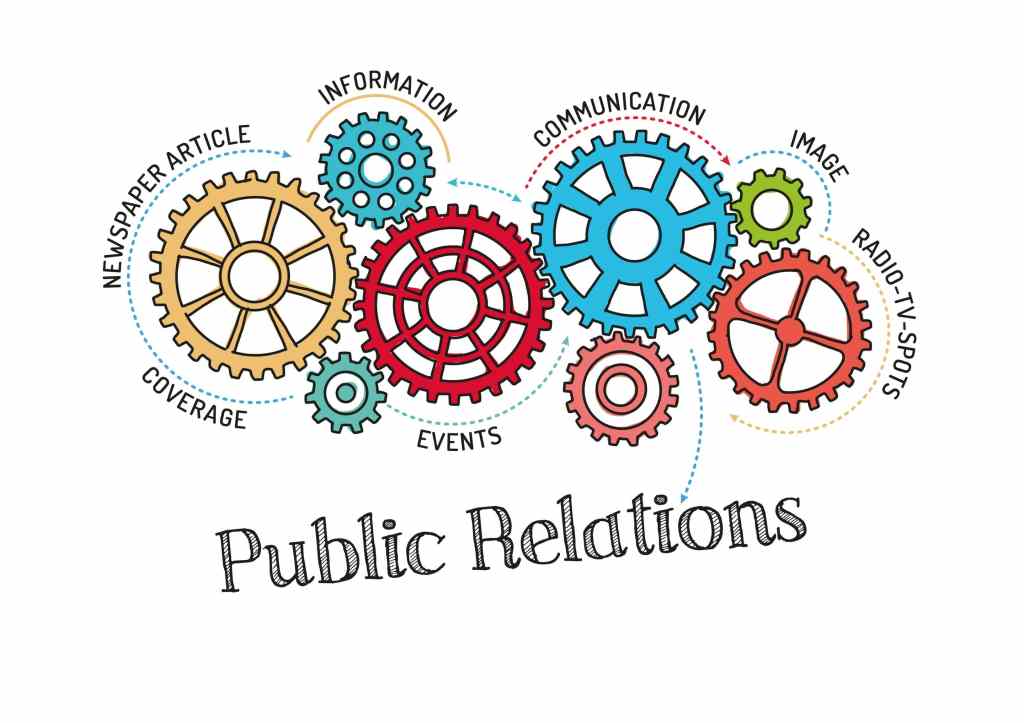
Public relations is defined as the marketing of an organization and the use of unbiased, objective, third-party endorsement to relay information about that organization’s products and practices. This is where those beloved Press Releases comes in. The press release is the tool we use to gain coverage from news media outlets to cover our events.
Don’t all these components do the same thing?
I love this question because… the question is yes. And no. When you think about your organization, you will typically find that there is one person responsible for marketing and communications. This is just a nice way of saying you have someone in your organization that handles “integrated marketing”. They kind of do it all. If you need a catchy tagline? Call Josie. If you need to send out a press release for your upcoming event? Josie can do it. Oh, we need a new flyer for this new program. Josie can do that, too! But this is a new concept.
Have you ever watched the TV show Mad Men? Think about all of the staff they had on hand. They had someone that came up with the tagline or slogan concept (marketing). That concept was then delivered to the graphics department (advertising) who then created a story board that was eventually presented by, Don Draper (public relations). Three components, one goal – get the consumer to commit to Sterling Cooper and Partners. This is the same as integrated marketing.
That’s asking a lot from a communications department, isn’t it?
Why yes it is. But. It’s important for them to be included in all of the steps. They know your organization. They know the mission, the clients, the donors, and they know the audience. Having someone on your payroll that can do all of this is priceless (I know, but, money to pay for them is an entirely different topic). They know your staff, they know schedules of events or programs. They know deadlines. It is by far more efficient to pay someone with all of this knowledge than try to educate a marketing firm, provide them access to everything, and communicate on a regular basis any changes that made need to be made on the fly (off schedule, for those who have never worked in the food industry).
Bottom Line?
Don’t leave out any components. Give your marketing and communications person or team some slack. Budget for professional develop to improve your communications person or team AND your organization more expertise. And, my sweet, sweet, summer child fundraiser, your best friend is your marketing/communications team – buy them cupcakes and coffee – but not these cupcakes.













 Fundraising with Jenn